
Beginner Home Gym Setup for Women in Small Spaces
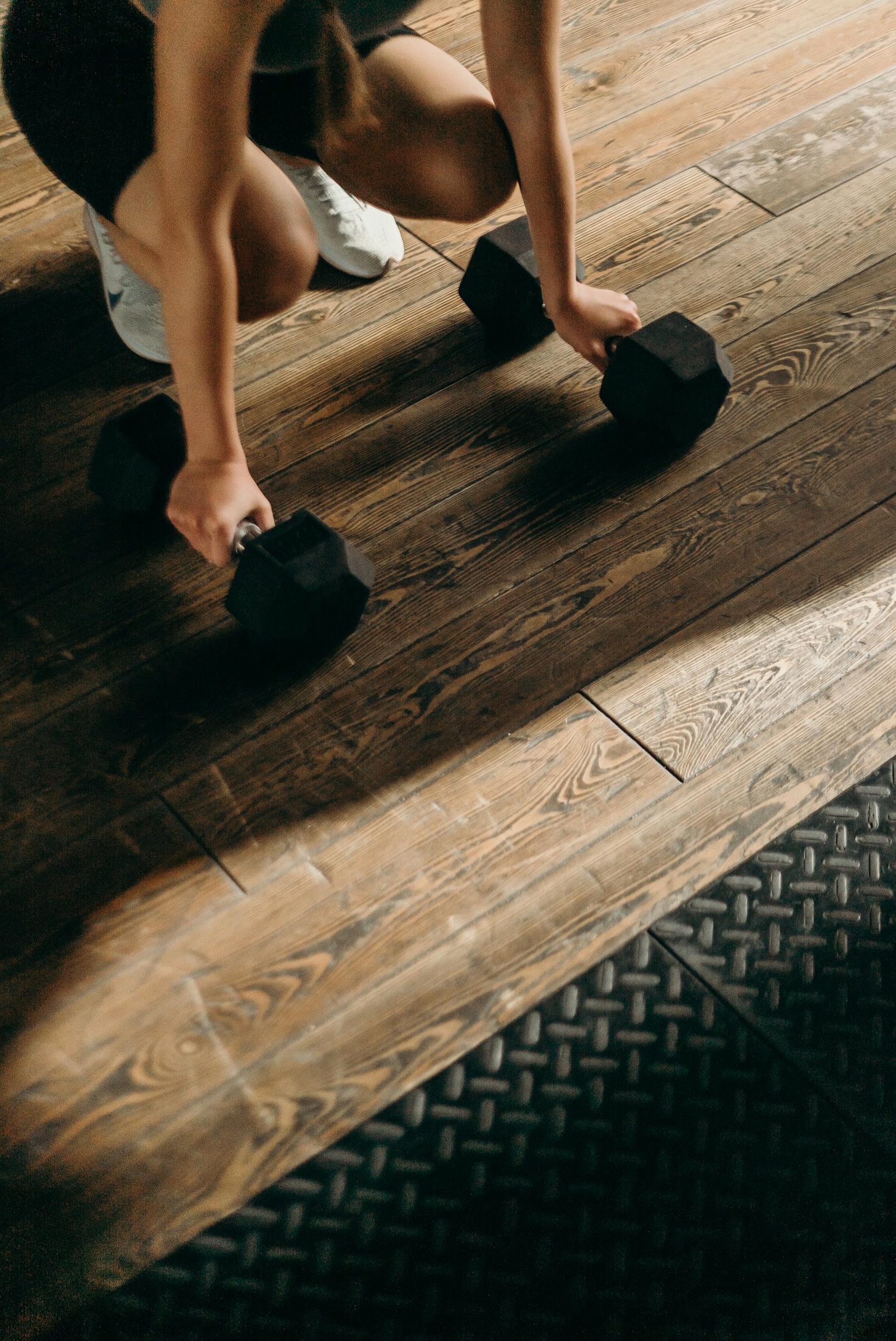
You do not need a dedicated gym room or wall-to-wall equipment to build strength at home. A beginner home gym setup for women should feel practical, contained, and realistic inside the space you already live in.
Most hesitation comes down to space and overwhelm. Dumbbells on the floor. A mat that never gets rolled up. A corner that slowly turns into storage instead of strength. There is no extra room, and the idea of turning a bedroom into a permanent workout zone feels disruptive.
A beginner home gym for women works best when the setup supports consistency without dominating your layout. A thoughtful home workout space can live inside a small bedroom, shared living room, or narrow corner when the equipment is intentional and contained.
This guide outlines a beginner home gym setup that prioritizes small space solutions, functional strength training equipment, and additions that support regular use.
This post may contain affiliate links, including Amazon affiliate links. As an Amazon Associate I earn from qualifying purchases at no extra cost to you.
Why a Beginner Home Gym Setup for Women Looks Different
A beginner home gym setup for women is not a scaled-down commercial gym. It is structured around real schedules, shared rooms, and limited storage.
Most women are not training for maximal lifts. They are fitting strength training between work, family, and daily responsibilities. The equipment must support that rhythm.
Choose versatile pieces over bulky machines. Select weights that progress with you. Store equipment so the space still feels like home.
When your home workout setup feels integrated instead of intrusive, it becomes easier to maintain.
Small Space Home Gym Ideas That Fit Real Homes
Most homes are not built with a fitness studio in mind. That does not prevent you from building a functional home workout space.
A small space home gym can live in:
- A bedroom corner beside a dresser
- A living room edge defined by a mat
- A spare nook near a window
- A hallway alcove with vertical storage
Define the space without overbuilding it.
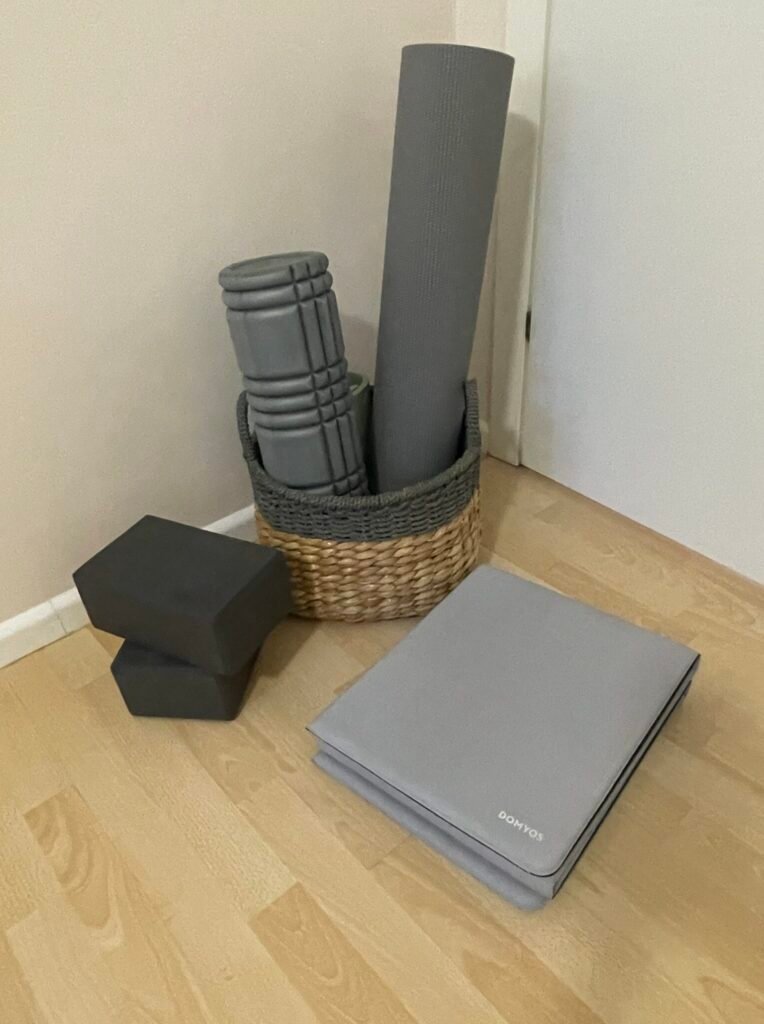
A neutral mat anchors the workout area. A woven basket contains bands and accessories. A low shelf keeps dumbbells organized instead of scattered.
You should be able to complete your workout and restore the room within minutes.
Design Details That Keep It Feeling Like Home
You do not need a full mirror wall or studio lighting. A simple floor mirror can help with form and reflect light in a smaller room. Wooden pegs or wall hooks keep resistance bands off the floor. A neutral faux plant softens the edges of equipment without turning the space into a showroom.
These details are optional. They exist to support consistency, not aesthetics.
Essential Equipment for Strength Training at Home
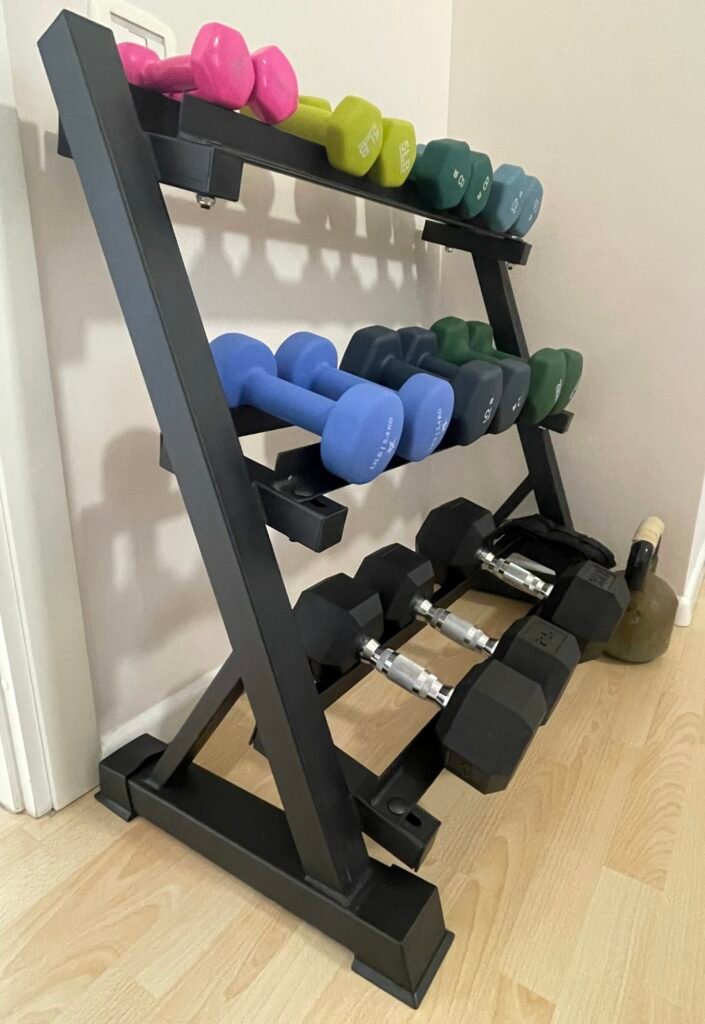
A beginner home gym setup for women does not require a long equipment list. It requires a few versatile tools that support full-body strength training at home.
Dumbbells in Two Practical Weights
Start with one lighter pair and one moderately challenging pair. This allows progression without expanding your footprint. Adjustable dumbbells can work in a small space home gym, but two fixed sets are often simpler to use and easier to store.
A Quality Mat
A mat protects flooring, reduces noise, and clearly defines your home workout space. Choose a neutral tone that blends into your decor so the setup feels integrated.
Resistance Bands
Resistance bands expand strength training options without adding bulk. They store easily in a drawer, basket, or wall hook system, keeping your small space home gym contained.
Compact Storage
Storage is structural. A woven basket, narrow shelf, or pegboard prevents visual clutter and keeps your home gym for women functional long term.
That is enough to begin.
Optional Additions That Expand Your Setup
Once your foundational equipment is being used consistently, you can layer selectively.
A Jump Rope
A jump rope adds efficient cardio without consuming space. It stores in a drawer and works well for quick sessions alongside strength training at home.
A Rebounder
A compact rebounder offers low-impact cardio, especially when outdoor movement is limited. Choose one that folds or stores vertically to protect your small space layout.
These additions should solve a need, not create clutter.
Workout Clothes and Sneakers That Support Your Setup
Clothing affects follow-through more than most people admit. If you are constantly adjusting leggings mid-set or lacing shoes that feel unstable under dumbbells, the workout becomes harder than it needs to be.
You do not need an extensive workout wardrobe. You need pieces that:
- Stay in place during strength training
- Provide support without adjustment
- Transition easily into the rest of your day
Sneakers matter even in a home workout space. Stable shoes support dumbbell work, while light cushioning helps during jump rope or rebounder sessions.
Keep one dedicated pair near your workout area. That small cue reinforces consistency.
How to Start a Home Gym Without Overbuying Equipment
Overbuying is the fastest way to abandon a beginner home gym setup.
Start with:
- Two sets of dumbbells
- One mat
- One set of resistance bands
Use them consistently for a month before adding more.
Strength training at home expands naturally. Equipment multiplies quickly. So does clutter.
A small space home gym works best when it grows with your routine, not ahead of it.
Creating a Home Workout Setup You’ll Actually Use
The most effective beginner home gym setup for women removes barriers.
Keep equipment visible but contained. Keep storage simple. Keep the footprint small.
When your home workout space feels calm and manageable, returning to it becomes routine instead of resistance.
Consistency builds strength. Not square footage.
If you want a closer look at the specific pieces I use and recommend, I’ll be sharing my full home gym favorites and design ideas separately.
Final Thoughts on Building a Beginner Home Gym Setup
A beginner home gym for women should support strength training at home without reshaping your entire house.
Start small. Choose versatile equipment. Store it intentionally. Add slowly.
The goal is not to recreate a commercial gym. It is to create a home workout setup that fits your real life.