
Dog Proof Cat Feeding Station Ideas That Aren’t Ugly
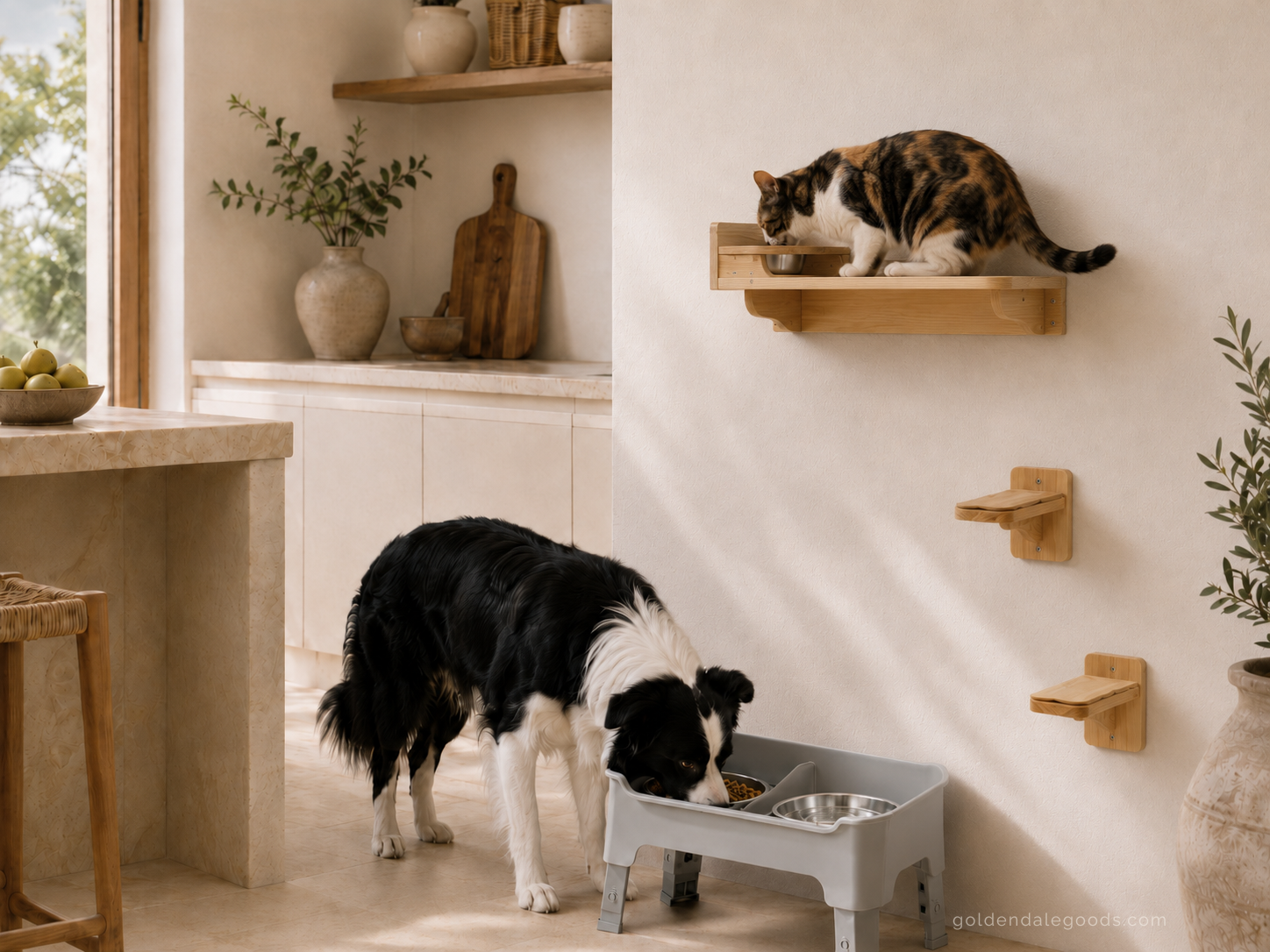
If you live with both a dog and a cat, you already know how this goes. You turn your back for thirty seconds and the cat food is gone, the cats are sulking, and you are left googling solutions that all look like they belong in the back room of a vet clinic.
It is one of the more maddening parts of a multi-pet home. It is also completely fixable, and you do not have to fill your house with ugly plastic to do it. The trick is controlling who can actually get to the food, not just finding a prettier bowl and hoping for the best.
This post may contain affiliate links, including Amazon affiliate links. As an Amazon Associate I earn from qualifying purchases at no extra cost to you.
Why dogs raid cat food in the first place
This is not a discipline problem, so you can let your dog off the hook. Cat food is simply richer than dog food, higher in protein and fat, which makes it smell incredible if you happen to be a dog. To most dogs it is less a meal and more buried treasure.
A stolen bite here and there is not the end of the world. Steady access is the real issue. Over time it can lead to weight gain, an upset stomach, and in some dogs more serious digestive trouble, so if yours is raiding the bowl regularly it is worth mentioning to your vet. The cats lose out too. They are particular about how they eat, and a dog hovering nearby or a crowd of cats jostling over one bowl creates a quiet kind of stress that can throw off both their appetite and their mood.
The most common fix, and when it stops working
Most people try the obvious thing first. You put the cat bowls up on a sideboard, a low console, or a shelf, somewhere the dog cannot easily reach, and hope that buys you some peace. It is a sensible instinct, and for plenty of homes it genuinely does the job. If you have a small breed, an older dog, or one who has never once considered jumping on the furniture, a well-placed surface might be all you need.
Most dogs are not so easily deterred. A medium or large dog with any real interest in food will crack a low console by dinnertime. A younger one will spot the chair next to it and treat it like a staircase. Height on its own only works as long as your dog stays uninterested, and that is not something you want to build a daily routine around.
What holds up across more dogs and more homes is controlling access instead of relying on height alone. You build a feeding zone only the cats can reach or step into, then make it look like it belongs in the room. There are three ways to do that, and most homes end up combining two of them.
Option 1: Microchip and RFID feeders
If you want the most foolproof option on this list, this is it. These feeders open only for the assigned cat, triggered by your cat’s microchip or an RFID collar tag, and stay firmly shut for everyone else. No training, no gaps to measure, no room to give up.
The catch is cost, and it climbs with more cats. For a one-cat home, a single feeder solves the whole thing cleanly. For three cats who refuse to share, you are potentially buying three of them, which is real money. In a multi-cat house, these earn their keep most when one cat is on prescription or special food that truly cannot be shared, rather than as a fix for everybody.
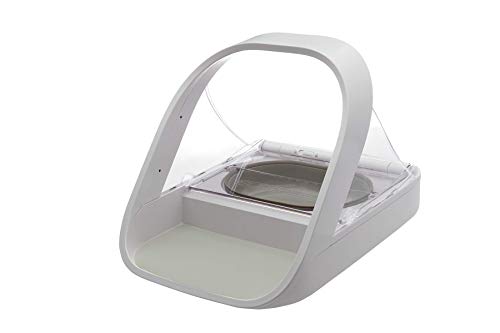
Opens only for your cat's registered microchip, no collar tag required. Best for single-cat homes or one cat on separate food
Reads your cat’s microchip directly, so there is no extra collar tag to keep track of. The simplest and most reliable pick of the bunch.

Opens via collar tag and schedules portions. Suited to grazers and timed feeding.
Uses collar tags and lets you schedule portions, which makes it a better fit for cats who like to graze through the day.
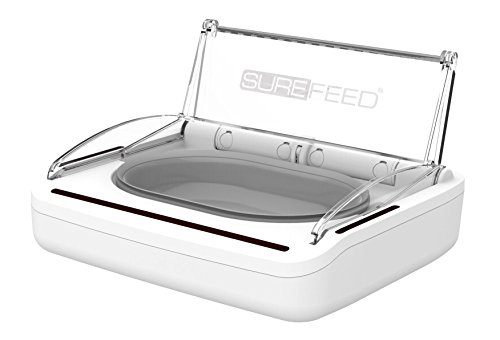
Lid seals when the cat steps away. Designed for wet food, not full dog-proofing.
A lower-cost option for when your real worry is wet food sitting out, not an all-out raid. The lid seals the moment the cat steps away.
Option 2: Cat-only rooms, gates, and door latches
The most budget-friendly route, and honestly the first one worth trying. The idea is simple. You give the cats a spot the dog cannot squeeze into, whether that is a laundry room, a pantry alcove, a hallway nook, or a guest bath. A cat slips through a few inches of gap without thinking twice. Most dogs simply cannot.
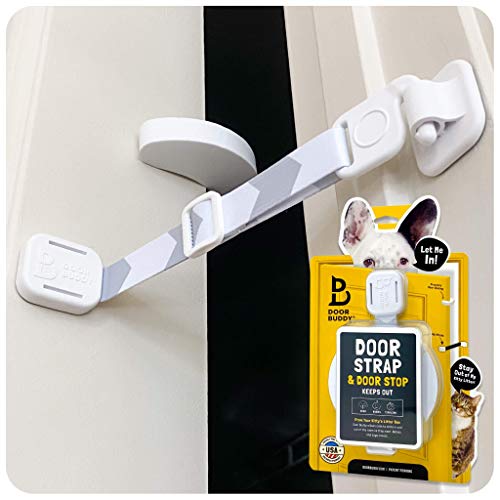
Holds an interior door open a few inches. No tools or installation. Rental-friendly.
Holds an interior door open just a few inches. The cat strolls through, the dog hits a wall. No tools, no damage, barely any money. The rental hero of this whole list.

Freestanding gate with a cat-sized opening at the base.
A freestanding gate with a cat-sized opening at the bottom, for when there is no room door to work with. If your dog is young and springy enough to clear a standard gate, look for an extra-tall version with a cat door built in.

Installs into an interior door. Fits cats up to 21 lbs, so measure against your dog.
Installs into an interior door to give the cats a permanent private entrance to their feeding spot. Sized for cats up to 21 pounds, so measure the opening against your dog before you commit.
One thing worth doing before you trust any of this: measure your dog across the shoulders and set the gap smaller than that. Dogs fit through tighter spaces than you would expect. Keep an eye on the first few meals to make sure nobody is bulldozing their way in.
The honest limitation here is space. This only works if you have a room or a door to spare, which counts it out for a lot of apartments and open-plan homes. If square footage is tight, the wall shelf and cabinet options below will serve you better.
Option 3: Wall-mounted shelves and enclosed cabinets
Two setups here hold up across just about any dog, big or small, determined or lazy: get the food high enough that the dog physically cannot reach it, or tuck it inside something the dog cannot get into. Both keep the feeding zone right out in the room, no spare space required.
Wall-mounted feeding shelf. The bowls sit on a bracket the cats hop up to, usually by way of a couple of built-in steps, and the dog has no way to follow. It is the most space-saving option on the list, and in warm wood with simple hardware it reads as proper cat furniture rather than a compromise. Skip it for older or arthritic cats who would rather not jump.

Birch wall set with two steps and a feeding platform. No floor space required
A birch shelf set with two built-in steps that lifts the bowls up out of reach, without surrendering an inch of floor space.
Enclosed feeding cabinet. A real piece of furniture with a dog-proof way in, where the bowls, the food, and the inevitable mess all live tucked inside. From across the room it just reads as a cabinet, not a feeding station.

Furniture-style cabinet with a grille gate, raised bowls, and lower storage.
A furniture-style cabinet with a grille gate the dog cannot push through, raised bowls inside, and closed storage below to hide the food bag.
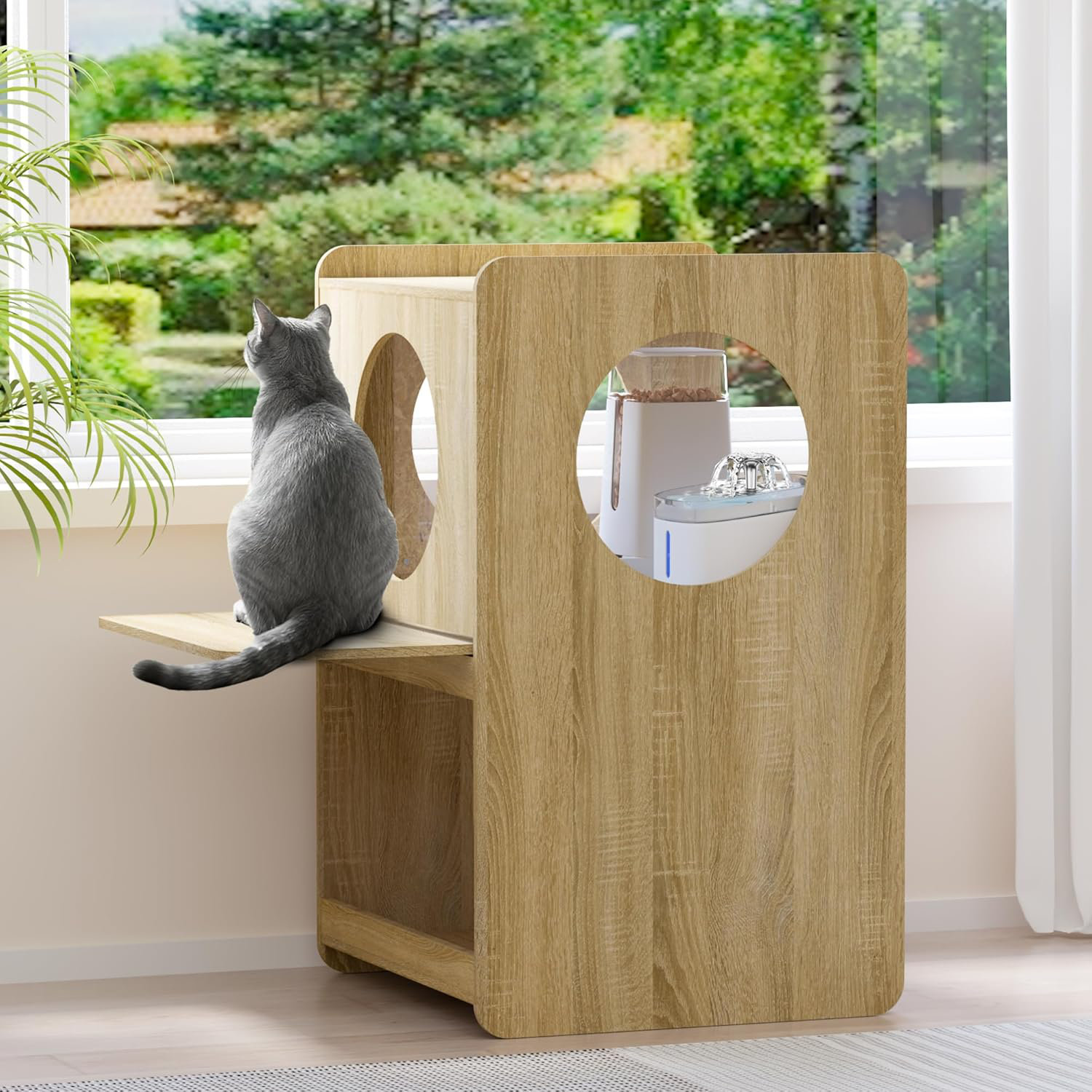
Elevated feeding table with a pull-out bowl shelf and window perch.
An elevated feeding table with a pull-out bowl shelf that lifts the food off the floor, plus a window perch the cats can lounge on between meals.
Whatever you go with, use ceramic or stainless bowls over plastic inside, and make sure there is a pull-out tray or liner so cleaning does not turn into a whole project.
What the setup should actually look like
Most dog proof cat feeding station guides stop at function and never once consider the actual room. For anyone who cares how their home looks, that is backwards.
A feeding zone that reads as part of the room, instead of an apology in the corner of it, mostly comes down to materials. Warm wood, cane, rattan, light oak, walnut, and seagrass all pull their weight. Ceramic or stainless bowls wear better and look better than plastic. A stone-look or neutral silicone mat underneath catches the spills without announcing itself.
Color matters just as much. Cream, oatmeal, warm white, camel, terracotta, and olive all read as intentional. Soft black and aged brass make good accents. Steer well clear of the gray-and-paw-print look, which ages badly and argues with everything warm in the room.
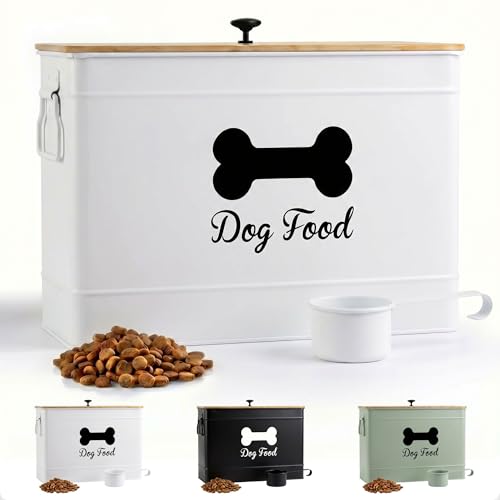
Two small things make the biggest difference. Get the kibble out of its bag and into a ceramic or glass canister that looks at home on a counter. Then set one deliberate object nearby, a little plant up high, a stack of baskets, a pretty jar, so the whole corner reads as styled rather than strictly functional.


What to skip
Plastic gravity feeders out in the open. They do the job mechanically, but they read as clutter in any room. If one is genuinely right for a particular cat, hide it inside a cabinet.
Open bowls on the floor in a dog-and-cat house. This is the exact setup you are trying to get away from.
Gray carpeted pet furniture. It shows every hair, wears out fast, and fights almost every warm material in the room.
Paw-print bowls and mats. Your home does not need a theme.
Putting it together
If you want a place to start, a warm wood or cane-front cabinet in a low-traffic corner, with a Door Buddy latch or a gate controlling who gets in, covers most multi-pet homes beautifully. Give each cat its own bowl inside to keep the peace at mealtimes. Add a microchip or RFID feeder only if your dog manages to outsmart the barrier.
The logic underneath all of it stays the same no matter which combination you land on. Separate the feeding zones, keep the working parts hidden inside furniture that actually suits your room, and control access instead of crossing your fingers and hoping for good behavior. That is what keeps the dog out of the cat food for good.
Want every one of these picks in one place? I rounded up all my dog-proof cat feeding favorites in my Amazon storefront, so you can see them side by side and skip the endless scrolling.